 SPRINGFIELD – Illinois is a step closer to becoming a national leader in the realm of enhancing safety and privacy within the artificial intelligence space after members of the Illinois Senate Democratic Caucus passed their comprehensive plan Thursday that would put forth AI protections as it relates to mental health help, identity security, price gouging safeguards and other areas that need more guardrails.
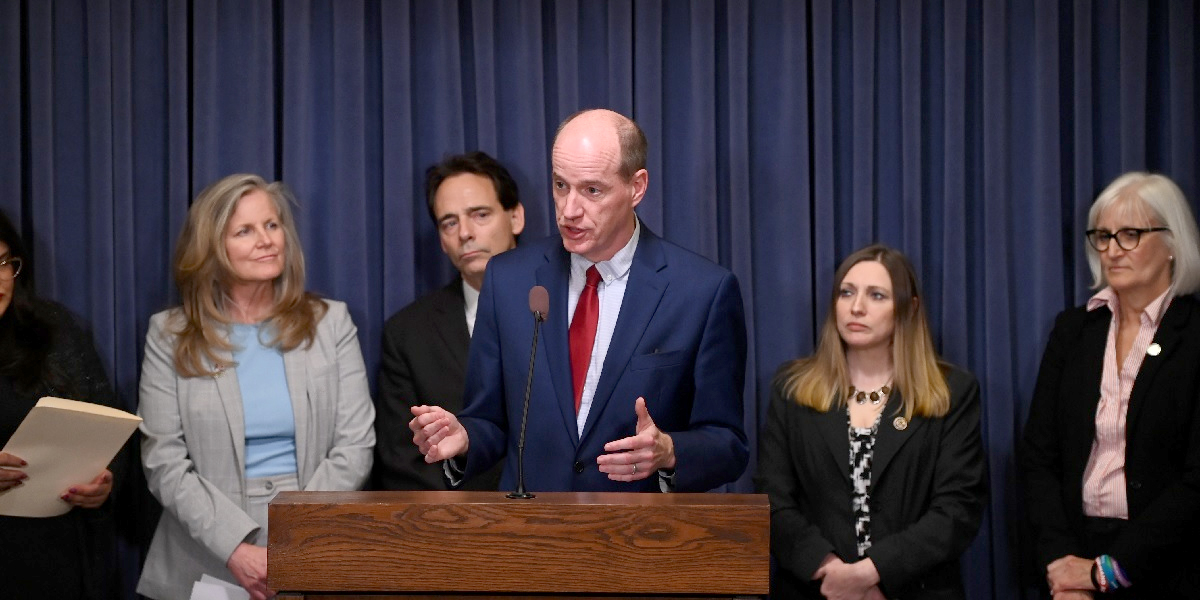
“Artificial intelligence is already shaping nearly every part of our daily lives, and Illinois cannot afford to wait for Washington to act,” said Bill Cunningham, a Democrat who represents portions of Chicago and the Southwest Suburbs. “This legislative package is the result of months of hearings and collaboration focused on creating responsible safeguards around AI, including consumer protections, data privacy, child safety and transparency in schools. Our goal is to help establish clear standards that protect the public while allowing innovation to move forward responsibly.”
To enhance commonsense guardrails on large AI companies – and in turn build public trust – State Senator Mary Edly-Allen is leading Senate Bill 315. The measure would require large developers – such as ChatGPT and Claude – to provide an independent, third party annual report explaining what mechanisms they have in place to mitigate catastrophic risks, provide transparency reports and report critical safety incidents. Further, it would require the companies to report a critical safety incident within 72 hours of learning about it, or 24 hours if the incident poses an imminent risk of death or serious physical harm.
“Artificial intelligence is advancing rapidly and is like the ‘Wild Wild West’ with little to no guardrails in place. While these tools can create opportunities, they also come with serious risks if left unchecked,” said Edly-Allen (D-Grayslake). “This measure is about putting responsible safeguards in place before a preventable catastrophe occurs. Illinois has an opportunity to lead the nation by setting clear expectations for transparency, accountability and public safety.”
Throughout the country, there have been instances of teenagers and young adults turning to AI during a mental health crisis. In some cases, the person confided in the AI chatbot about their suicidal thoughts – and a real person was never alerted. Under Senate Bill 316, led by State Senator Laura Ellman, AI companies would be required to implement methods for detecting user expression of suicidal ideation or self-harm, work to prevent such harm, and provide a notification to the user that refers them to a crisis service provider, such as the 9-8-8 suicide hotline.
“As artificial intelligence becomes more personal and conversational, we have a responsibility to ensure these systems are not exploiting vulnerability or putting users, especially young people, in harm’s way,” said Ellman (D-Naperville). “AI companions are being marketed as emotional supports and trusted confidants, but without safeguards, these systems can reinforce dangerous behavior or fail to intervene during moments of crisis.”
When people turn to companies for questions or assistance, often they’re forced to talk with a chatbot rather than a real human – but with technological advancements, it’s not always clear who you’re chatting with. To increase transparency and accountability, State Senator Rachel Ventura is leading Senate Bill 317. The measure would require any person or company using a conversational artificial intelligence system in a chat interface to communicate with a consumer during trade or commerce to provide the consumer with a clear and conspicuous disclosure at the beginning of the interaction that the consumer is communicating with an automated system and not with a human.
“As working families struggle to find affordable homes and rising demand continues to drive up prices, we have a responsibility to preserve our existing housing supply for people, not large corporate investors,” said Ventura (D-Joliet). “Unchecked investor activity is pricing Illinoisans out of their own neighborhoods, and we need clear guardrails to restore balance.”
Every time someone interacts with a website or mobile application, it holds onto the data – often leading to consumers receiving unwanted targeted ads. Under State Senator Laura Murphy’s Senate Bill 340, consumers would have the option to opt out of having their data used for such ads or sold to third parties. Further, it would protect people from being subjected to algorithmic profiling that could influence major life decisions like loan approvals, job screenings or insurance rates. Senate Bill 340 would prohibit the sale of a consumer’s most sensitive data, without requiring a consumer to opt of the sale.
“Private companies should not have limitless control over the personal data of consumers and should face consequences if they violate consumer privacy,” said Murphy (D-Des Plaines). “Consumers have a right to know what data is being collected and the steps they can take to limit the use of their data.”
AI-driven rental pricing platforms are known to facilitate rent price-fixing, causing artificial, double-digit rent increases in an era when people are already struggling to afford their day-to-day life. Under Senate Bill 343 from State Senator Graciela Guzmán landlords would not be able to coordinate pricing indirectly through a shared third-party service or software, such as an algorithm that sets prices across multiple competing landlords.
“At a time when families are already struggling with rising costs, we cannot allow landlords to collude through software designed to maximize profits at the expense of our communities,” said Guzmán (D-Chicago). “Let’s be clear, this is not innovation, this is digital price fixing. Illinois is sending a clear message: our housing market should work for renters, not predatory corporations.”
AI is also becoming more prevalent in education in all forms. However, students and their families shouldn’t have to worry if their identity or data is being taken advantage of or discriminating against them – especially at school. Senate Bill 415, led by State Senator Karina Villa, would only allow school districts to use biometric data for legitimate instructional purposes.
“In a digital age, we must do everything we can to protect children’s sensitive information, especially in school settings,” said Villa (D-West Chicago). “The use of biometric systems in schools opens the door for the misuse of data or a potential breach. Students and their families deserve to know that their information is secure.”
Further, the scores students receive should be fair and accurate – determined by a real person, not a computer. State Senator Robert Martwick is ensuring that is the case in schools across the state through Senate Bill 416. The measure would prohibit teachers from using artificial intelligence to assign grades on students’ work.
“We are navigating a new frontier of artificial intelligence,” said Martwick (D-Chicago). “It is incumbent on us to ensure that there are guardrails to ensure the people of Illinois have the baseline consumer protections and privacy they deserve in a rapidly changing environment. It is essential for us to provide protections to students in educational settings.”
Additionally, the everyday person is having a harder time acquiring fair-priced concert and sports tickets – in large part because bots are scooping them up and reselling them for outrageous fees. State Senator Steve Stadelman is working to prevent the use of bots to purchase tickets in excess, and prohibit a reseller from falsely representing that it is affiliated with an artist, team or venue through Senate Bill 318.
“Fans should have a fair shot at buying tickets at the advertised price without competing against bots or being misled by deceptive sellers,” said Stadelman (D-Rockford). “This legislation increases transparency and helps protect consumers from unfair practices in the ticket marketplace.”
The measures part of the Senate’s AI safety and privacy package passed Thursday and head to the House for further consideration.