
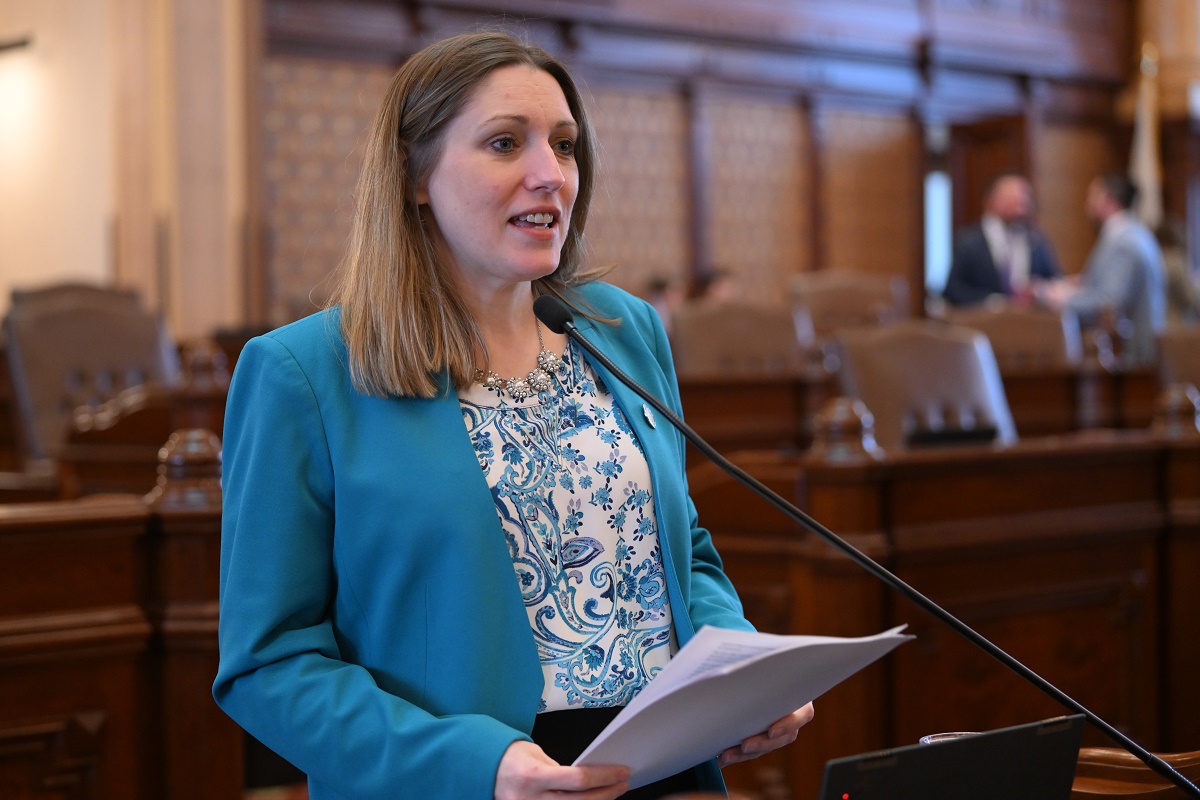
SPRINGFIELD – A measure from State Senator Rachel Ventura that would provide opiate use disorder treatments for incarcerated individuals passed the Senate Criminal Law Committee Tuesday.
“Overdoses are the leading cause of death among people returning to their communities after incarceration,” said Ventura (D-Joliet). “There is an urgent need for comprehensive opiate use disorder programs statewide, and this legislation would save lies, is compassionate, and has the potential to break the cycle of addiction, improve health outcomes and reduce rates of recidivism.”
According to the National Institute on Drug Abuse, fewer than half of jails and prisons surveyed across the nation offer some form of medication for opioid use disorder, with only 12.8% making it available to anyone with the disorder. Under Senate Bill 2185, medically assisted treatments (MAT) and medication for opiate use disorder (MOUD) programs would be available in every state prison, ensuring those who are dealing with substance abuse are given proper and humane treatment.
The Illinois Department of Corrections would be required to screen every person within 24 hours of admission for substance use disorders as part of an initial and ongoing substance use screening and assessment process. If the individual screens positive as having or being at risk for an opioid use disorder, or is exhibiting symptoms of withdrawal from an opioid use disorder, they will be provided medication
The program would be funded by the Illinois Opioid Settlements Initiative, a fund comprised of settlement payments from opioid manufacturers, distributers and chain pharmacies who have been sued by the Illinois Attorney General for their role in the opioid crisis.
The bill is modeled after an MAT program used in Kane County Adult Justice Center since 2019, which Ventura learned about from Kane County Sheriff Ron Hain.
"We've dropped our opiate overdose deaths of formerly incarcerated by 89% for those in the medically assisted treatment program," Hain said. “This is proof that the program works and can significantly impact the incarcerated individual’s life.”
Senate Bill 2185 passed the Senate Criminal Law Committee Tuesday and heads to the Senate Appropriations Committee for further action.