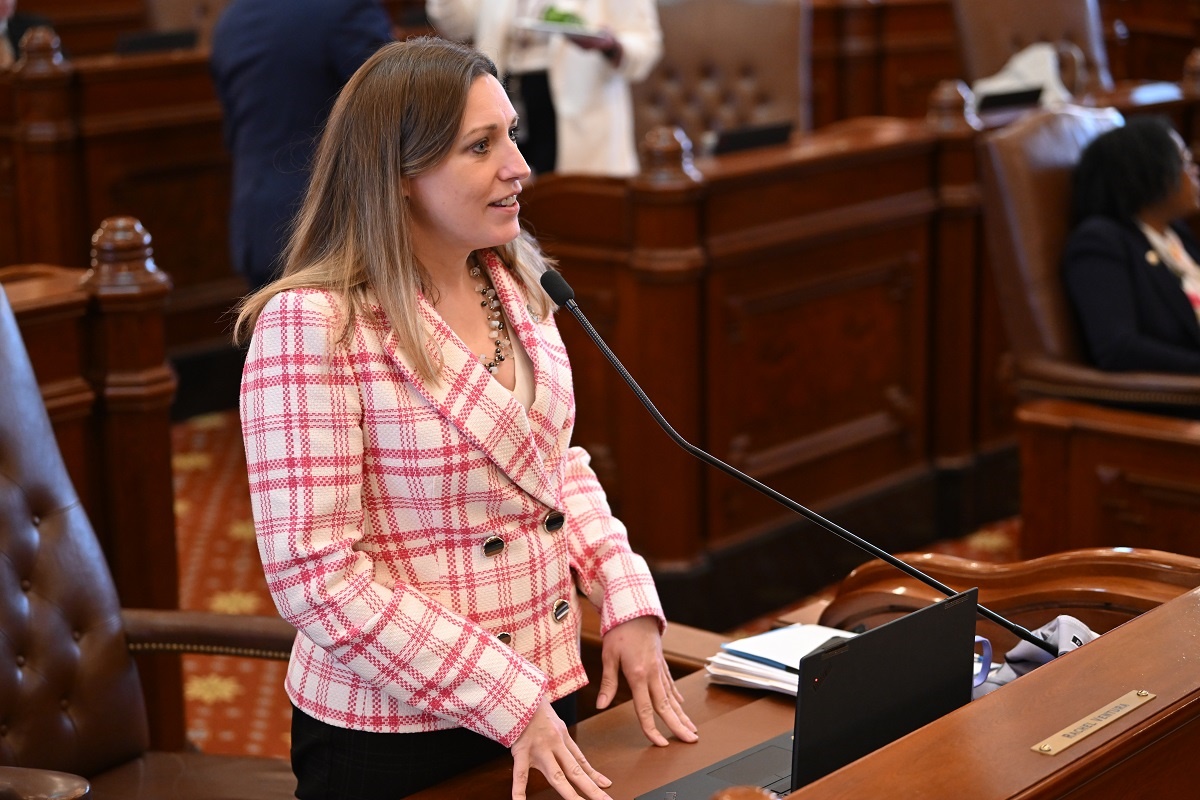
 SPRINGFIELD – A measure sponsored by State Senator Rachel Ventura that would require companies to disclose when consumers are interacting with an AI chatbot rather than a human representative passed the Senate Thursday.
“As artificial intelligence becomes more common in customer service, people are increasingly finding themselves trapped in frustrating conversations that lead nowhere,” said Ventura (D-Joliet). “Consumers deserve transparency from the very beginning of an interaction. If someone is speaking to a chatbot instead of a real person, they have a right to know.”
Senate Bill 317 would require a company using an artificial intelligence chat interface to notify a consumer with a clear and conspicuous disclosure at the start of the interaction that the consumer is communicating with an automated system and not a human representative.
The bill comes in response to growing consumer frustration with AI-driven customer service systems that often leave people stuck in endless automated loops, unable to get direct answers or reach someone capable of resolving their issue. While artificial intelligence can be useful for handling simple requests, it frequently falls short when consumers are dealing with urgent matters, billing disputes, canceled services, or other complex concerns that require human understanding and problem-solving.
“Too many people spend valuable time trying to get help, only to realize they’ve been interacting with a machine programmed to give generic responses instead of meaningful support,” said Ventura. “This legislation is about honesty, accountability and making sure consumers are not misled about who — or what — they are communicating with.”
The measure would allow consumers who fail to receive the required disclosure and suffer damages as a result to bring legal action against the company under the Consumer Fraud and Deceptive Business Practices Act. The bill would not apply to a business’ use of AI outside of direct interaction with consumers, such as internal analytics, fraud detection, inventory management, pricing or recommendation systems. It also would not impose liability on a business for a third-party AI system’s design or output so long as the business complies with the disclosure requirements.
Senate Bill 317 is part of a larger AI package being considered by the Senate. The bill passed the Senate Thursday and now heads to the House for further consideration.