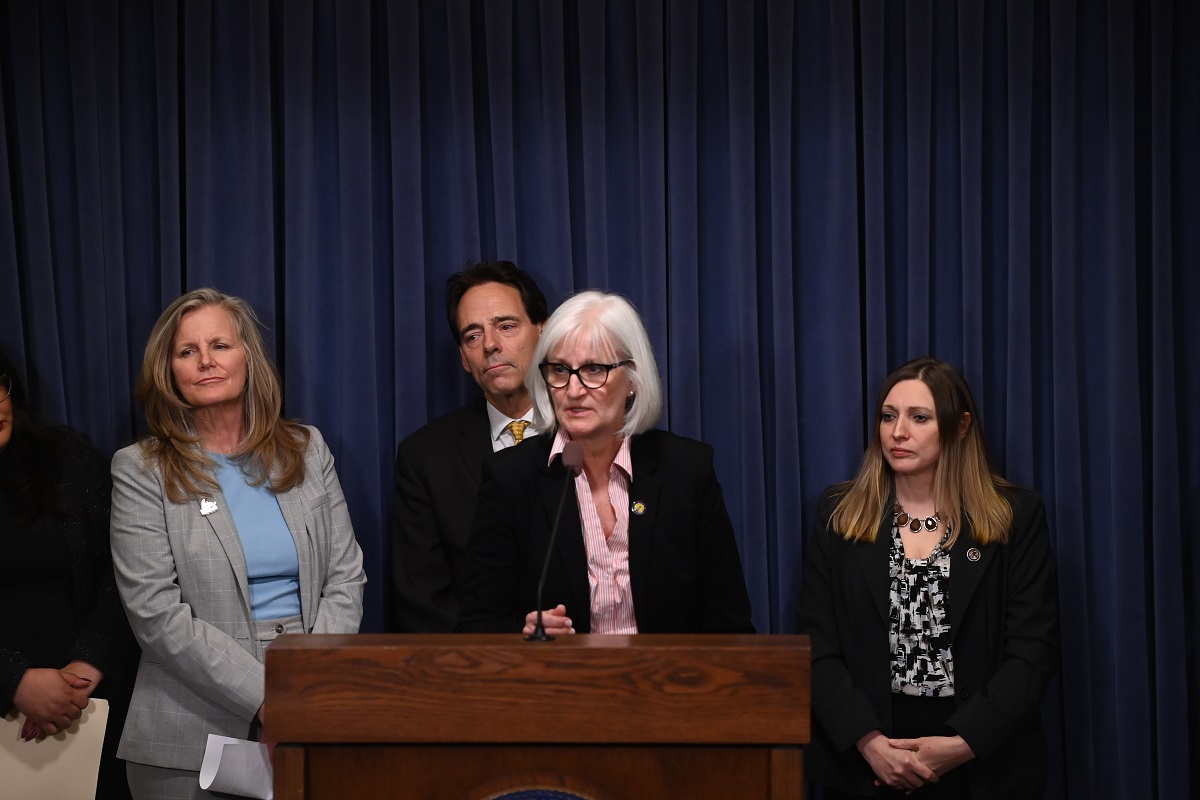
 SPRINGFIELD – Senator Mary Edly-Allen advanced legislation Wednesday to establish safety standards and transparency requirements for the largest artificial intelligence developers as AI systems become increasingly integrated into critical infrastructure, cybersecurity and public safety operations.
“Artificial intelligence is advancing rapidly and is like the ‘Wild Wild West’ with little to no guardrails in place. While these tools can create opportunities, they also come with serious risks if left unchecked,” said Edly-Allen (D-Grayslake). “This measure is about putting responsible safeguards in place before a preventable catastrophe occurs. Illinois has an opportunity to lead the nation by setting clear expectations for transparency, accountability and public safety.”
Senate Bill 315 would require large frontier AI developers, companies developing advanced models such as ChatGPT and Claude, to assess catastrophic risks, report critical safety incidents, undergo independent third-party audits and establish whistleblower protections for employees raising safety concerns.
Additionally, frontier developers would be required to report critical safety incidents to the Illinois Emergency Management Agency and the Office of the Attorney General within 72 hours, or within 24 hours if the incident poses an imminent risk of death or serious physical injury. The bill also would direct IEMA, in consultation with the Attorney General, to establish a reporting mechanism for both developers and members of the public.
Qualifying developers would also be required to complete annual independent audits assessing compliance with the law and publish redacted audit reports.
Lastly, Senate Bill 315 would strengthen whistleblower protections for employees who disclose information related to substantial public safety threats or violations of this measure.
“Power has to be matched with wisdom, transparency and responsibility,” said Edly-Allen. “This bill is not about stopping innovation, but balancing the great promise of AI with its potential harms.”
Senate Bill 315 – which is part of the Senate’s AI protection package – passed the Senate Executive Committee on Wednesday now heads to the full Senate for further consideration.