
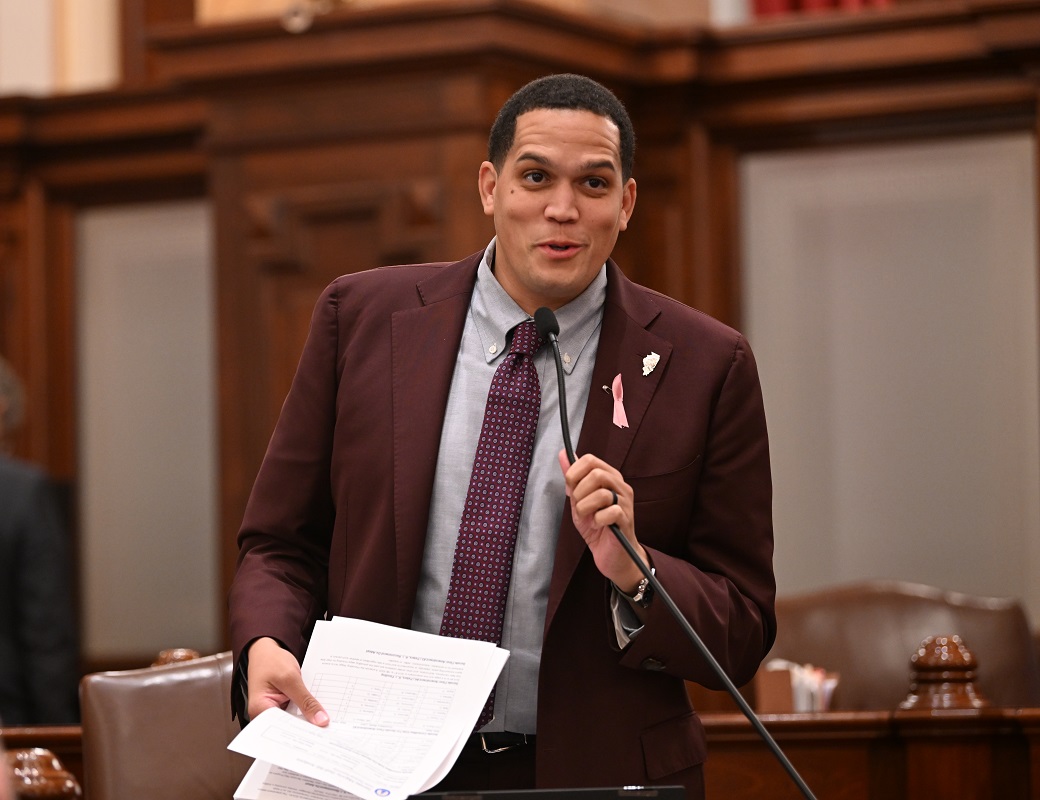
 SPRINGFIELD — A new law from State Senator Robert Peters will raise the minimum age at which minors can be detained and limit detention in certain situations where the minor is not charged with a violent crime, making it clear the state is prioritizing rehabilitation and addressing the root causes of delinquent behavior.
“We must work together to tackle the underlying issues that are exacerbating delinquency in our neighborhoods – whether those are social, economic, familial or a mix of all,” said Peters (D-Chicago). “We have an obligation to protect the well-being of all individuals, and we do that by breaking the cycles of violence and trauma that are causing young people to engage in any level of criminal activity.”
Peters’ law makes numerous improvements to Illinois’ juvenile justice system. First, it raises the age at which a minor may be detained from 10 years old to 12 years old in 2026 and then to 13 years old – in some situations – in 2027. Under the law, arrest will be used only as a last resort and under strict conditions, and minors will be detained only if there is probable cause to believe they are delinquent and that immediate and urgent detention is necessary, or if they have repeatedly failed to appear at scheduled hearings.
The new law will also create the youth nonviolent crime resource program, facilitated by the Department of Juvenile Justice, to provide resources to minors declared delinquent for nonviolent crimes. Resources would include mentoring, educational resources, employment training opportunities, behavioral health services and more. To review and study the necessity of juvenile detention centers, the complaints arising from them in the state, and community-based alternatives to juvenile detention, the law will create the Child First Reform Task.
These changes are vital for Illinois’ youth, offering them the chance to thrive outside the confines of detention centers. Unlike detention – which can make behavioral problems worse and individuals more likely to reoffend – rehabilitation efforts aim to address the root causes of delinquency, like trauma and mental health concerns. Implementing this approach will help reintegrate youth into society, offering long-term public safety and economic benefits to communities.
“If we want a safer, more supportive state, we have to not just intercept delinquency and violence, but also prevent them,” said Peters. “Raising the detention age and instituting community-based solutions for offending juveniles will ensure minors across the state get support when they need it, rather than a harmful detention sentence.”
House Bill 3492 was signed into law Friday. It goes into effect June 1, 2026 – with provisions on the youth nonviolent crime resource program taking effect Jan. 1, 2028.