
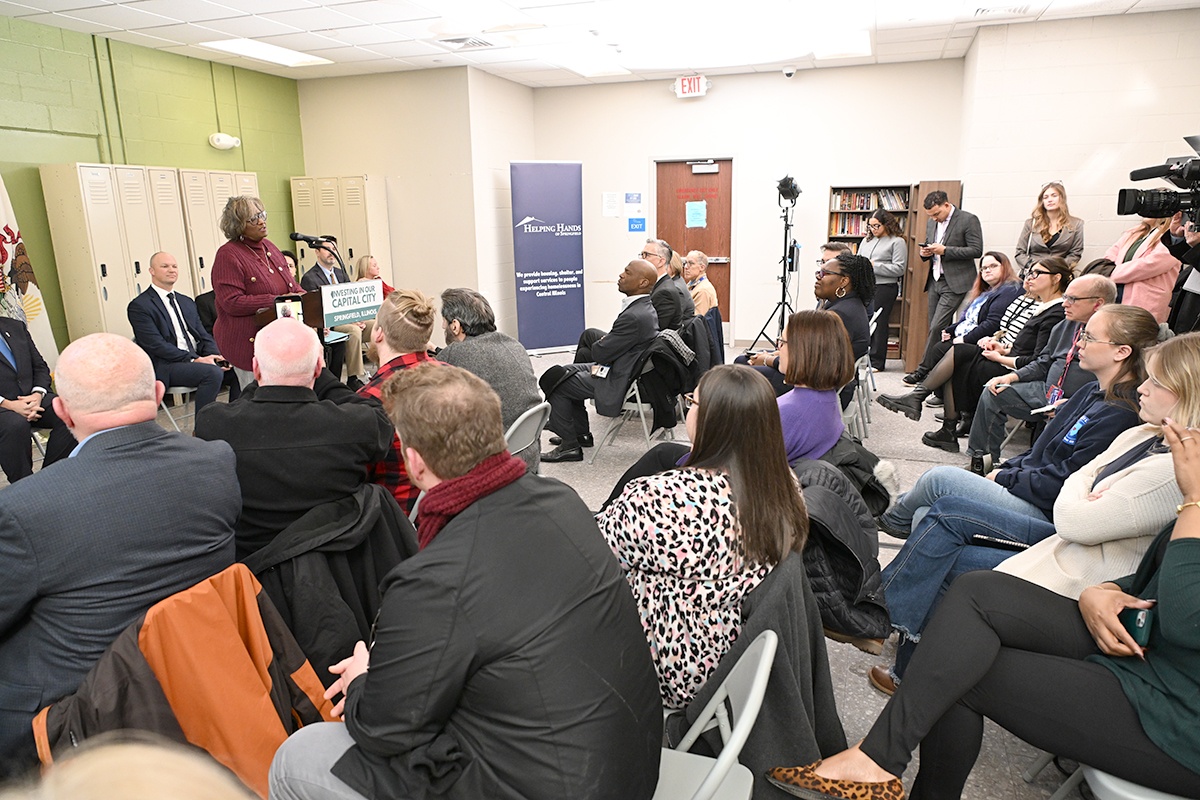
SPRINGFIELD – State Senator Doris Turner announced an investment of $2 million in community organizations dedicated to combatting homelessness in Central Illinois. These grant investments are part of the state’s interagency Home Illinois Plan, an initiative intended to drive state funding and policy toward preventing and eventually reaching functional zero homelessness – a goal where the state prevents homelessness whenever possible and ensures that if homelessness does occur, it is brief, rare and singular.
"With this funding, we are fulfilling our responsibility to help our neighbors stay housed and support our communities as they recover from the far-reaching effects of housing instability," said Turner (D-Springfield). "Every family in Illinois deserves a safe, secure place to call home, and this investment is essential to helping more families find stability, hope and a path forward."
The $2 million investment from the State’s Home Illinois grant, housed at the Illinois Department of Human Services, will support permanent housing programs for people experiencing homelessness and local organizations including Fifth Street Renaissance, Helping Hands of Springfield, and Mercy Communities, Inc. Funding will be focused on the proven, permanent housing models of rapid rehousing and permanent supportive housing.
From 2024 to 2025, homelessness decreased in over half of Illinois’ designated community areas and Sangamon County saw a 4% reduction in homelessness. These reductions are directly linked to the investments and strategies implemented in Home Illinois, and the continued investment and support will bolster the groundwork already underway. Over 11,000 formerly homeless Illinoisans are now housed in permanent housing because of Home Illinois.
Home Illinois is organized around building affordable and permanent supportive housing, bolstering safety nets, securing financial stability, and closing the mortality gap between people experiencing homelessness and the general population. A foundational goal underlying all strategies is ending the racial disparity that exists in homelessness.
This additional funding will have a profound impact on strengthening efforts to combat homelessness in Central Illinois and moving the state even further in its progress towards reaching functional zero homelessness. Between the organizations and agencies offering relief to those in need and the efforts lawmakers have made to prioritize funding for these endeavors, Illinois’ commitment to ensuring safe and secure housing for all is clear.