
Caucus News
- Details
- Category: Senator Karina Villa News
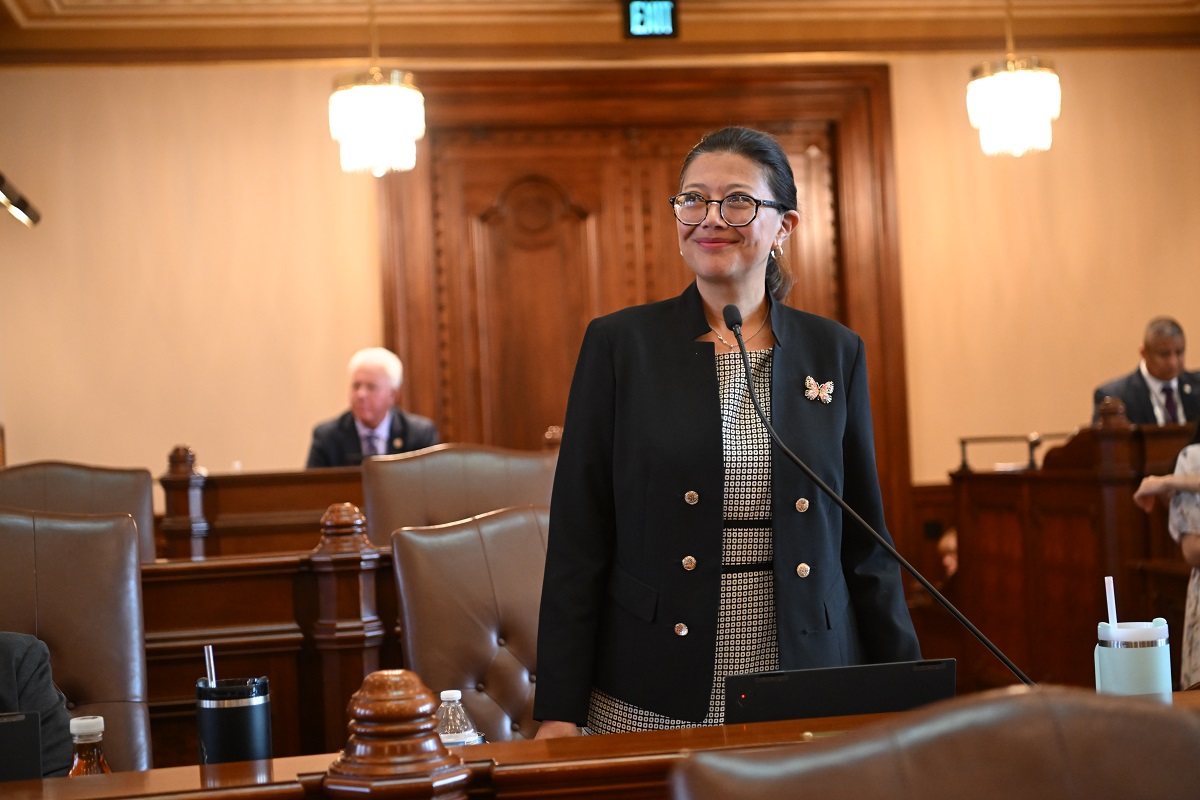
SPRINGFIELD – Thanks to a new law championed by State Senator Karina Villa, aspiring school social workers will have expanded opportunities to receive a scholarship.
“Expanding opportunities for people pursuing their education and licensure is critical to address the current shortage of behavioral health providers, especially in schools,” said Villa (D-West Chicago). “With the rates of anxiety and depression in young people on the rise, ensuring more capable professionals become school social workers is essential.”
House Bill 5460 will expand scholarship opportunities for school social workers by allowing School Social Worker scholarships awarded by the Illinois Student Assistance Commission to be used at private, not-for-profit institutions in addition to public universities.
Read more: Villa law expands scholarship opportunities for school social workers
- Details
- Category: Senator Robert Peters News
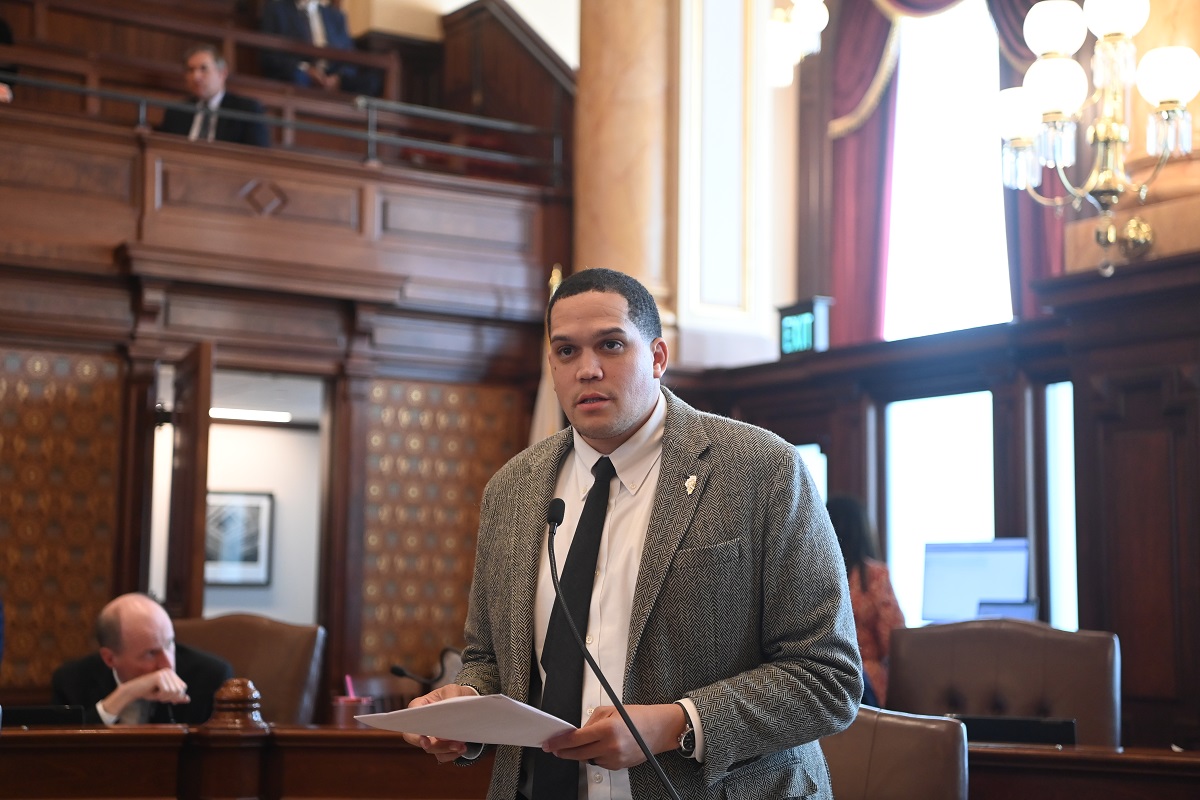
SPRINGFIELD — State Senator Robert Peters spearheaded a law that will allow for quicker and more accurate screenings of mental health crises during emergency calls, ensuring those in need receive dedicated trauma-informed care.
“By allowing specialized response teams to intervene in delicate situations, the state will be taking a more direct response to community safety,” said Peters (D-Chicago). “This is about reducing trauma during mental health crises and ensuring those in need are met with informed, empathetic care.”
Peters’ law will ensure Public Safety Answering Points are in compliance with the Community Emergency Services and Support Act – which connects 911 callers with behavioral health crisis care when appropriate. PSAPs are 24/7 call centers, often operated by local government or law enforcement, designed to receive 911 calls and route them to the appropriate emergency services – serving as a primary first-point-of-reception for emergency calls.
Read more: Peters law to bridge gap between mental health crisis and treatment
- Details
- Category: Senator Ram Villivalam News
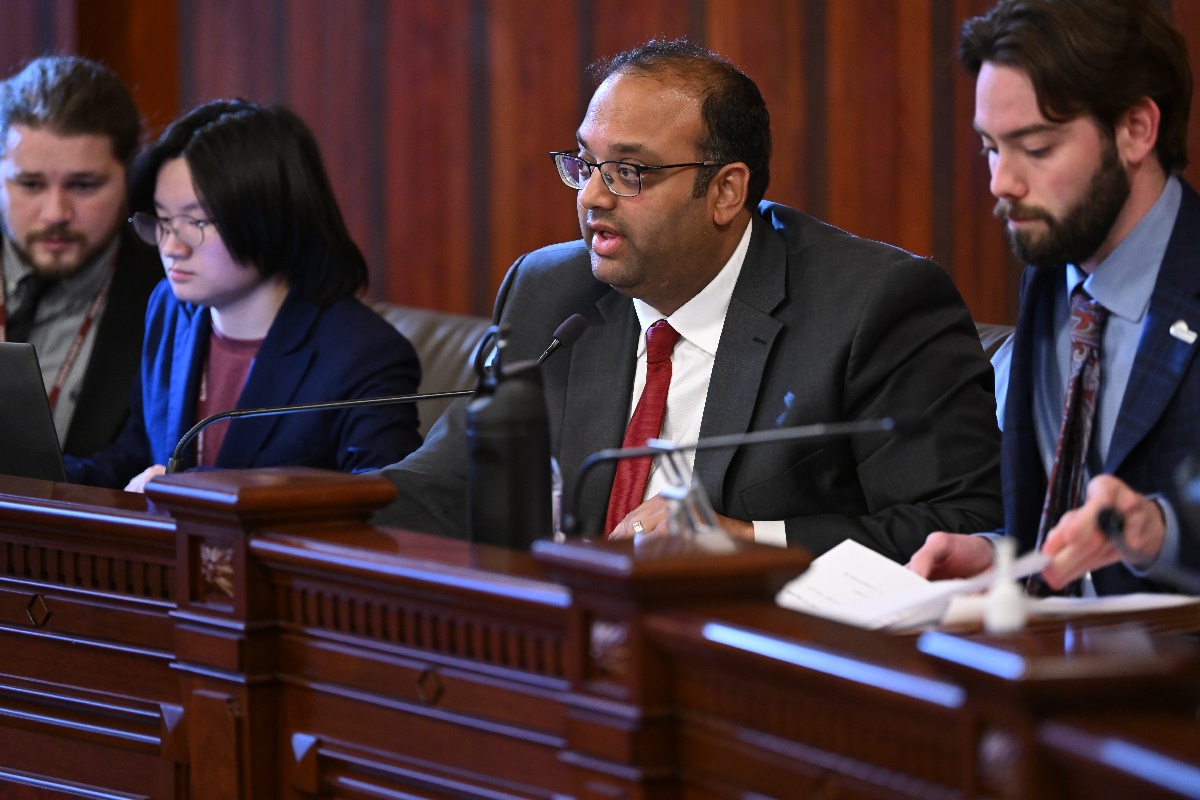 SPRINGFIELD ─ A new law championed by State Senator Ram Villivalam’s will allow rideshare drivers, such as those who drive for companies like Uber or Lyft, to unionize.
“Rideshare drivers are the back-bones of our communities, getting our neighbors to their job, school or doctors’ appointments,” said Villivalam (D-Chicago). “So many of our residents rely on rideshare drivers – meanwhile those driving are facing decreased wages, increased vehicle costs and unfair working conditions.”
Read more: Villivalam law allows rideshare drivers to unionize
- Details
- Category: Senator Lakesia Collins News
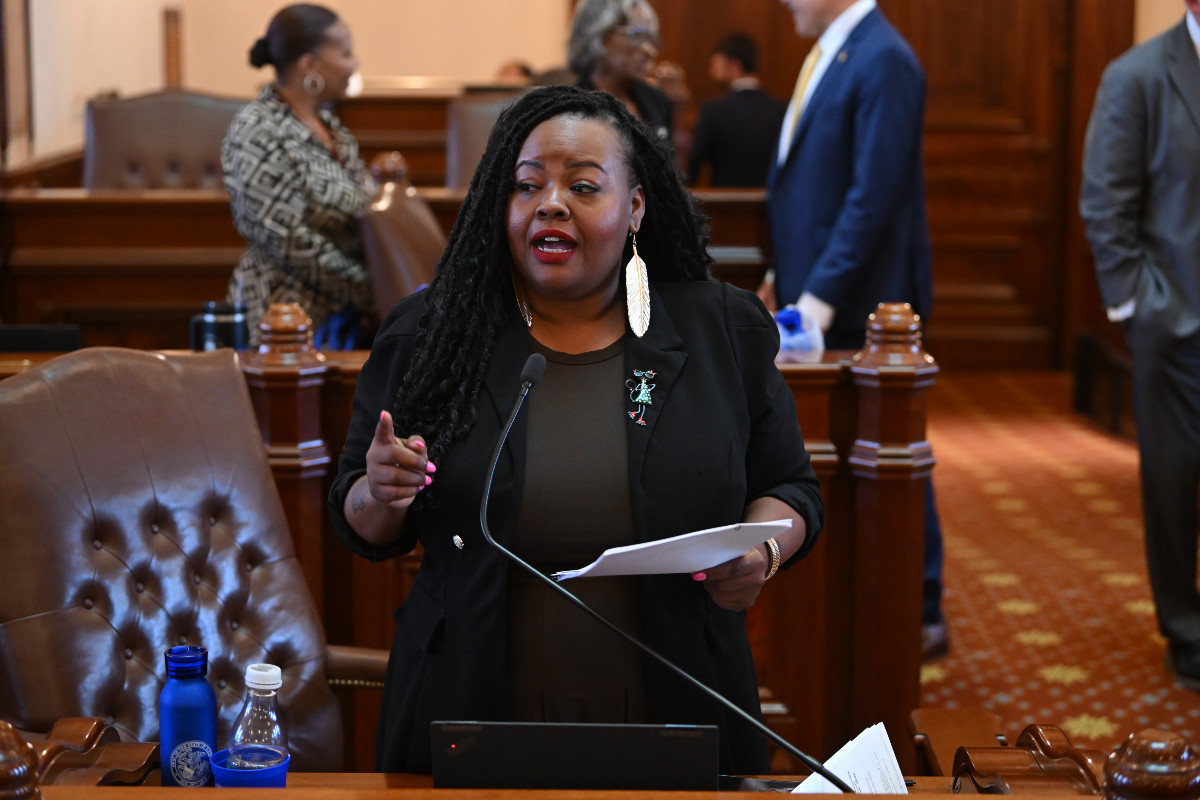
SPRINGFIELD – Individuals with disabilities and their caregivers will have access to safe, accessible facilities under a new law sponsored by State Senator Lakesia Collins.
“Many families find themselves without appropriate facilities in public spaces and are forced to cut outings short or skip them altogether,” said Collins (D-Chicago). “With this law we can give those families the facilities needed to live in our communities and participate without additional stress of wondering whether facilities are available.”
Collins’ new law, House Bill 4379, will expand Illinois’ Equitable Restrooms Act by requiring certain newly constructed public buildings and state-owned facilities to provide access to adult changing stations. Adult changing stations provide a safe, sanitary space for caregivers assisting older children and adults with disabilities who require personal care support.
Read more: Collins law expands access to adult changing stations in public spaces
- Details
- Category: Senator Patrick Joyce News

SPRINGFIELD – In an effort to modernize vehicle law to reflect the growth in agricultural technology, State Senator Patrick Joyce lead the effort to allow heavier farm wagons and similar agricultural equipment to qualify for existing code exemptions on the road.
“Times have been tough for farmers across the country,” said Joyce (D-Essex). “We must continue to do whatever we can in Illinois to make our state farmer-friendly.”
Since 1979, agricultural technology has undergone a seismic shift, and vehicle codes have not evolved alongside the increasing scale and sophistication of modern machinery. Forty-six years ago, a harvest staple was the Brent 250, a reliable wagon with a 400-bushel capacity and a maximum weight of approximately 26,200 pounds. Today’s counterpart, the Brent 757, boasts a massive 750-bushel capacity with weights reaching 52,370 pounds. While modern units have integrated vital safety features like all-wheel braking and high-visibility lighting, the state’s regulatory framework has not been updated to reflect these increases in mass. This creates a disconnect where farmers operate 21st-century technology under laws designed for the significantly smaller equipment of the 1970s.
Read more: Vehicle law hampering Illinois farmers updated, thanks to Joyce
- Details
- Category: Senator Michael E. Hastings News
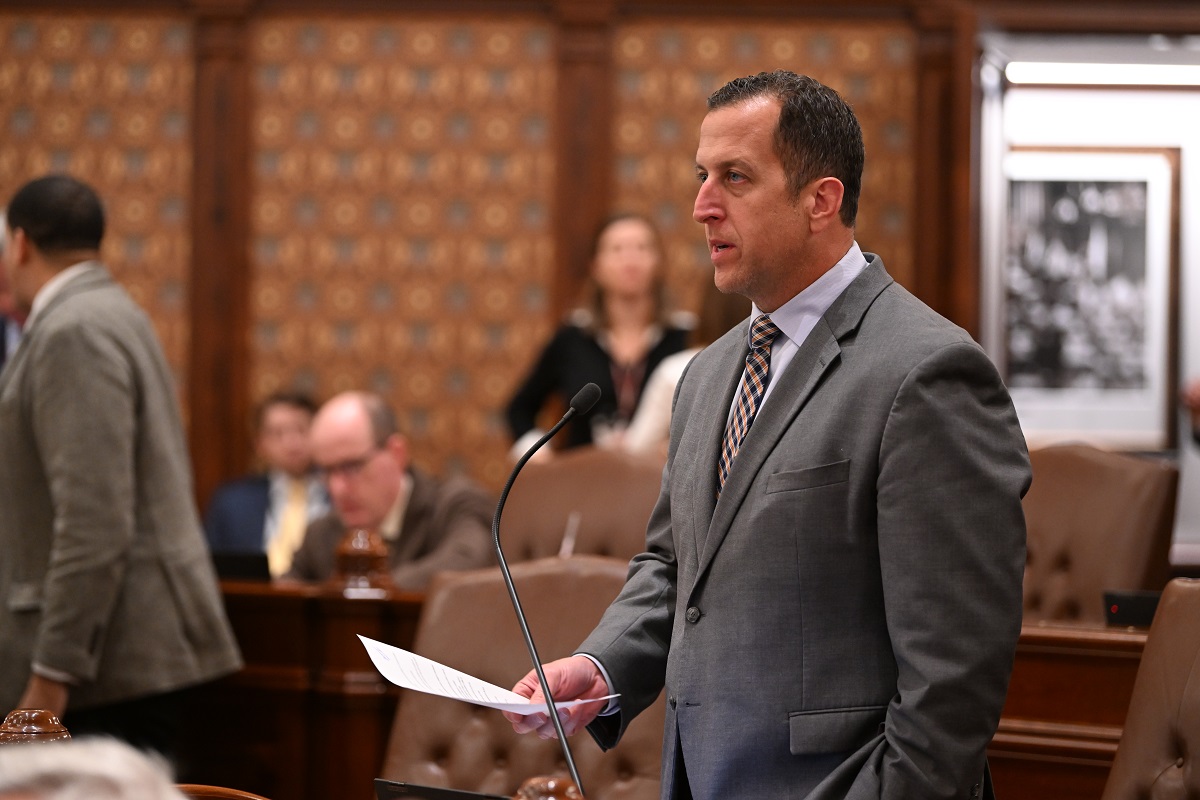
SPRINGFIELD — State Senator Michael E. Hastings led the way on a new law to safeguard the professional independence of attorneys and protect clients from undue influence by private equity investors, hedge funds and investor‑backed management services organizations.
“This bill is about one simple truth: Illinois clients deserve attorneys who are loyal to them, not to some distant investor chasing a quarterly return,” said Hastings (D-Frankfort).
While Illinois currently has laws limiting outside influence on law firms, private equity companies have found a new loophole using ‘management service organizations.’ Through MSOs, private equity can control key aspects of a law firm like billing, technology, marketing and administrative staff, enabling the control of firm strategy without technically owning the practice.
Read more: Hastings law cracks down on private influence of law firms
- Details
- Category: Member News
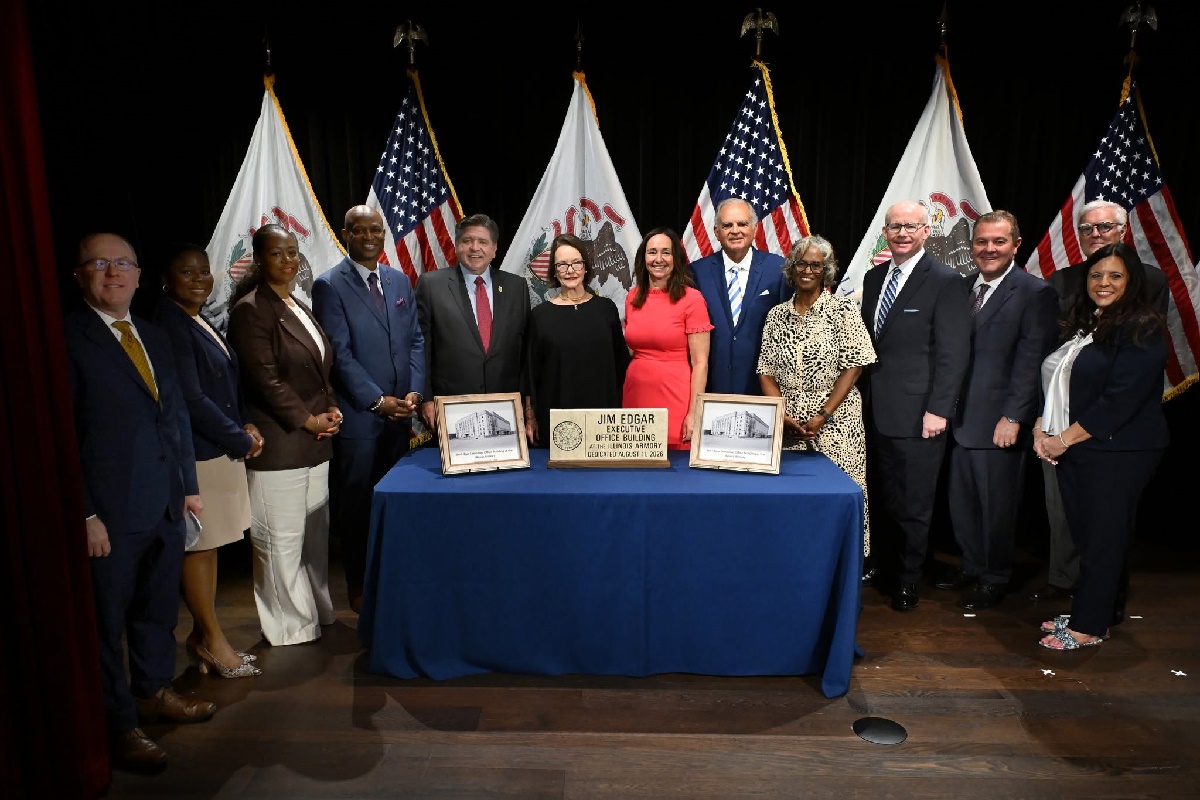 SPRINGFIELD — Senate President Don Harmon and State Senator Doris Turner joined a number of Springfield leaders to celebrate the Illinois State Armory’s renaming as the Governor Jim Edgar Executive Office Building – honoring his legacy of integrity and dedication to public service.
“Governor Jim Edgar’s legacy continues to live on,” said Turner (D-Springfield). “Governor Edgar dedicated his life to serving the people of Illinois with integrity, humility and a deep commitment to the people of Illinois. Today we preserve the legacy of a governor who believed in putting Illinois families first and bringing people together to get things done.”
- Details
- Category: Senator Celina Villanueva News
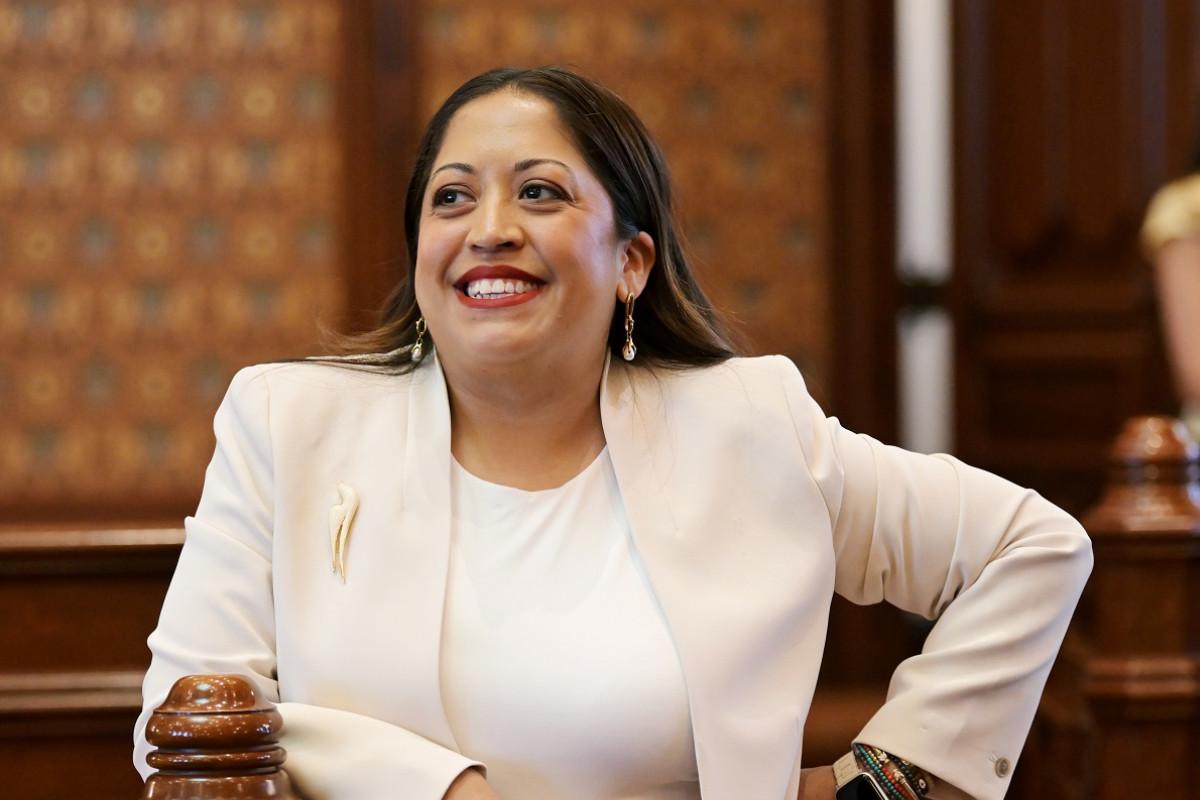
SPRINGFIELD – State Senator Celina Villanueva led a new law that strengthens environmental justice protections by ensuring state regulators consider the potential impacts on communities that have historically faced disproportionate environmental burdens when reviewing pollution control permits.
“The Illinois Constitution makes it clear that all residents have the right to a healthful environment, meaning no communities in the state should be forced to bear the disproportionate and adverse weight that comes with air pollution,” said Villanueva (D-Chicago). “Unfortunately, we know low-income, minority and immigrant communities are historically the ones who carry this burden and live with the effects of pollution exposure. This law recognizes that enough is enough and that our communities and families deserve better.”
Villanueva’s law requires the Illinois Environmental Protection Agency to evaluate environmental justice factors when reviewing certain air pollution construction permit applications. It also requires the IEPA to evaluate whether a proposed facility is located in an area of environmental justice concern and determine whether additional safeguards may be needed.
Read more: Environmental justice protections signed into Illinois law thanks to Villanueva
More Articles …
Page 4 of 824

Follow ILSenDems








Member News
-
Holmes’ new law gives family courts guidance to resolve pet custody when domestic partners split
 SPRINGFIELD – State Senator Linda Holmes remains steadfast in pursuing legislation to improve living conditions for animals, as her measure providing statutory guidance to Illinois courts when considering pet possession when unmarried couples break u...
 -
Porfirio resolution honors U.S. Marine Corps
 SPRINGFIELD – State Senator Mike Porfirio led a resolution to honor the U.S. Marine Corps through renaming a portion of Interstate Route 80. “Since its creation, the Marine Corps has played a key role in protecting and safeguarding the security and fr...
 -
Hastings: Freedom is never free
 SPRINGFIELD — State Senator Michael E. Hastings supported a resolution to honor the United States Marine Corps through renaming a portion of Interstate Route 80. Hastings, who served as a U.S. Army officer during Operation Iraqi Freedom, rose in supp...
 -
Jones honors fallen state trooper with memorial highway
 SPRINGFIELD – State Senator Emil Jones III successfully led a resolution to rename a portion of I-55 in honor of late State Trooper Clay M. Carns. “Trooper Carns died doing the same thing he had done every day for 11 years – diligently and faithfully...
 -
Johnson declares Menopause Awareness Week
 SPRINGFIELD – To bring awareness to a condition that will be faced by more than half of all Illinoisans, State Senator Adriane Johnson championed the effort to declare Oct. 11-17, 2026 Menopause Awareness Week. “Highlighting menopause is vital to gua...
 (217) 782-2728
 321 State House
Springfield, IL 62706




(312) 814-2075
160 N. LaSalle St., Ste. 720
Chicago, IL 60601