
Welcome to the Illinois Senate Democratic Caucus

Hunter, Turner highlight continued investment to prevent food insecurity
- Details

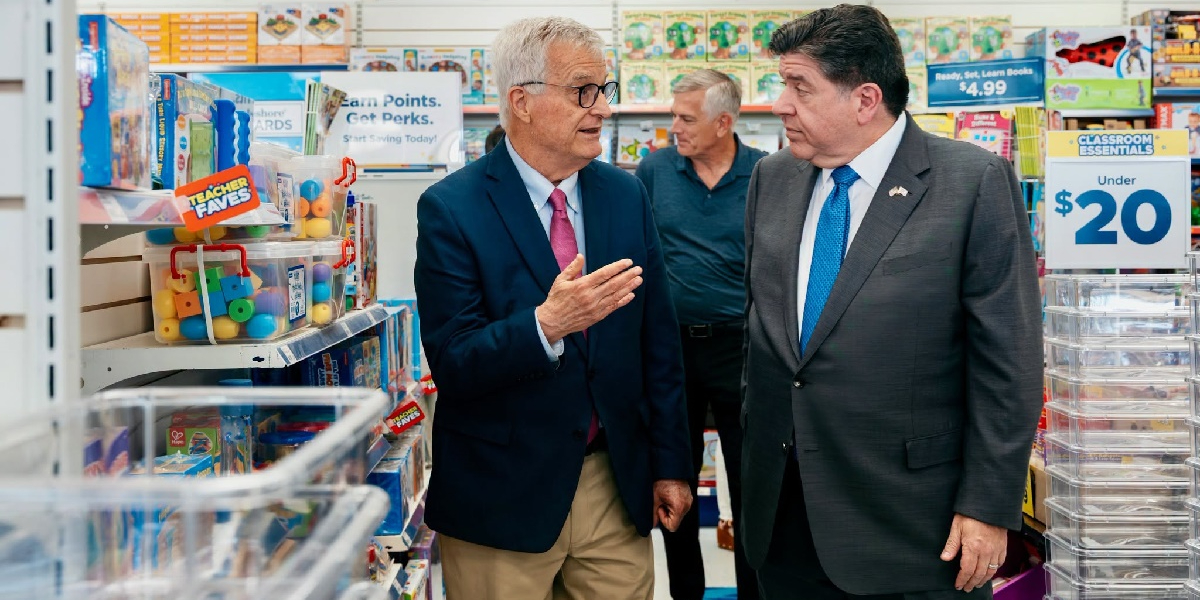
State Senators Mattie Hunter and Doris Turner announced new funding opportunities under the Illinois Grocery Initiative. Together, the New Stores in Food Deserts, Equipment Upgrades and Grocery Rescue grant programs represent a $26 million effort to address food deserts and prevent grocery store closures in communities across the state.
“All Illinoisans deserve access to fresh and healthy foods,” said Hunter (D-Chicago). “The Illinois Grocery Initiative is critical to ensuring this goal becomes a reality. I’m thrilled to see the state’s continued investment in these efforts to prevent food insecurities across Illinois.”
The new Grocery Rescue Program will support efforts to reopen stores that have closed within the preceding 12 months. This program is designed to prevent long-term food access loss in low-access tracts, preventing the formation of new food deserts. Funding can be used for store acquisition, repair, refurbishing property and equipment and some first-year operating costs.
Read more: Hunter, Turner highlight continued investment to prevent food insecurity
Koehler shares his enthusiasm for new Illinois State University College of Engineering
- Details
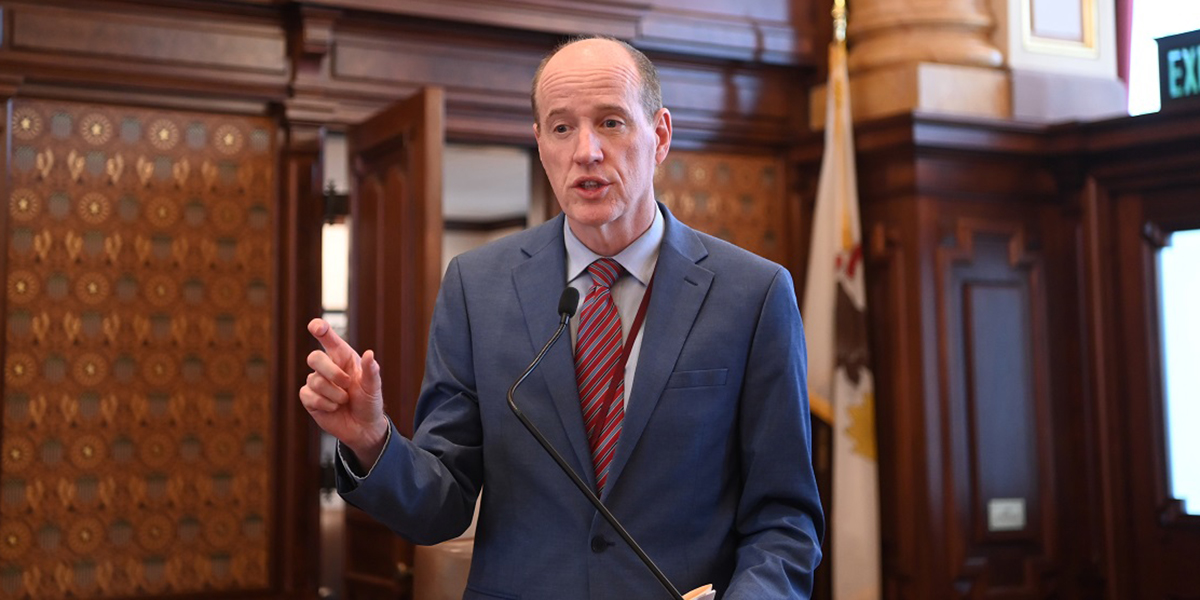
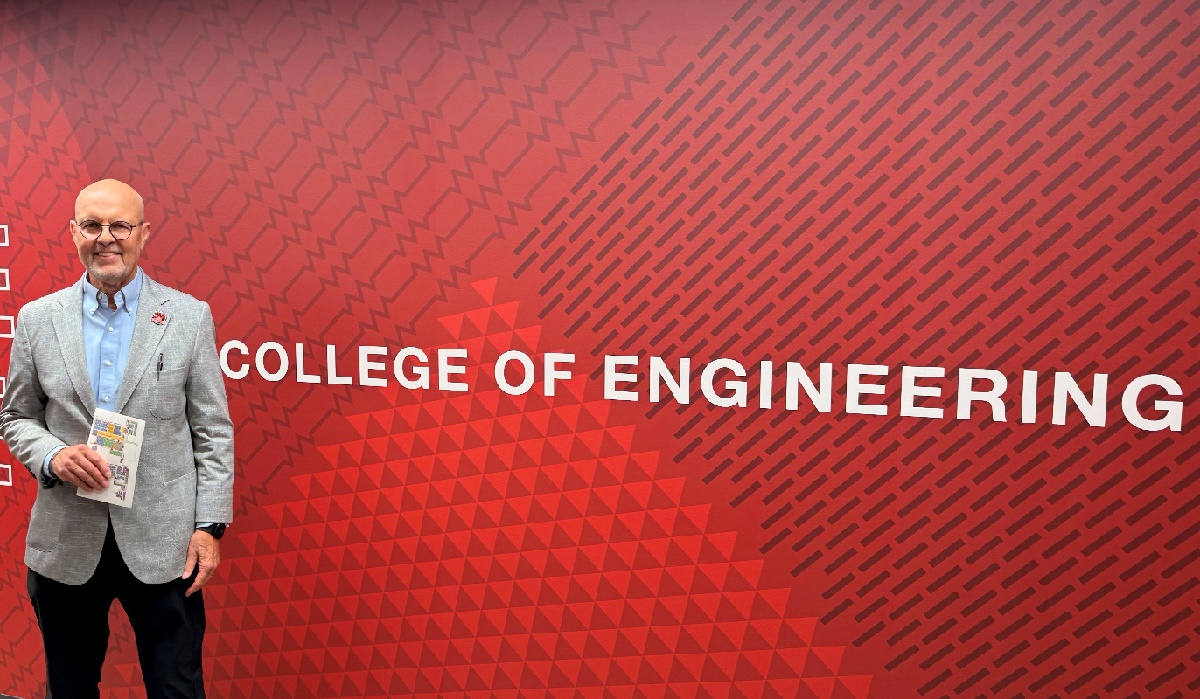 NORMAL – State Senator Dave Koehler joined Illinois State University leaders and state officials Monday to celebrate the opening of the university’s new College of Engineering facility.
“The opening of Illinois State University’s School of Engineering is an exciting investment in our students and the future of our workforce,” said Koehler (D-Peoria). “Expanding opportunities to pursue engineering at ISU will help grow the talent pipeline so more students call central Illinois home.”
Read more: Koehler shares his enthusiasm for new Illinois State University College of Engineering
Villivalam leads law regulating use of micromobility devices
- Details
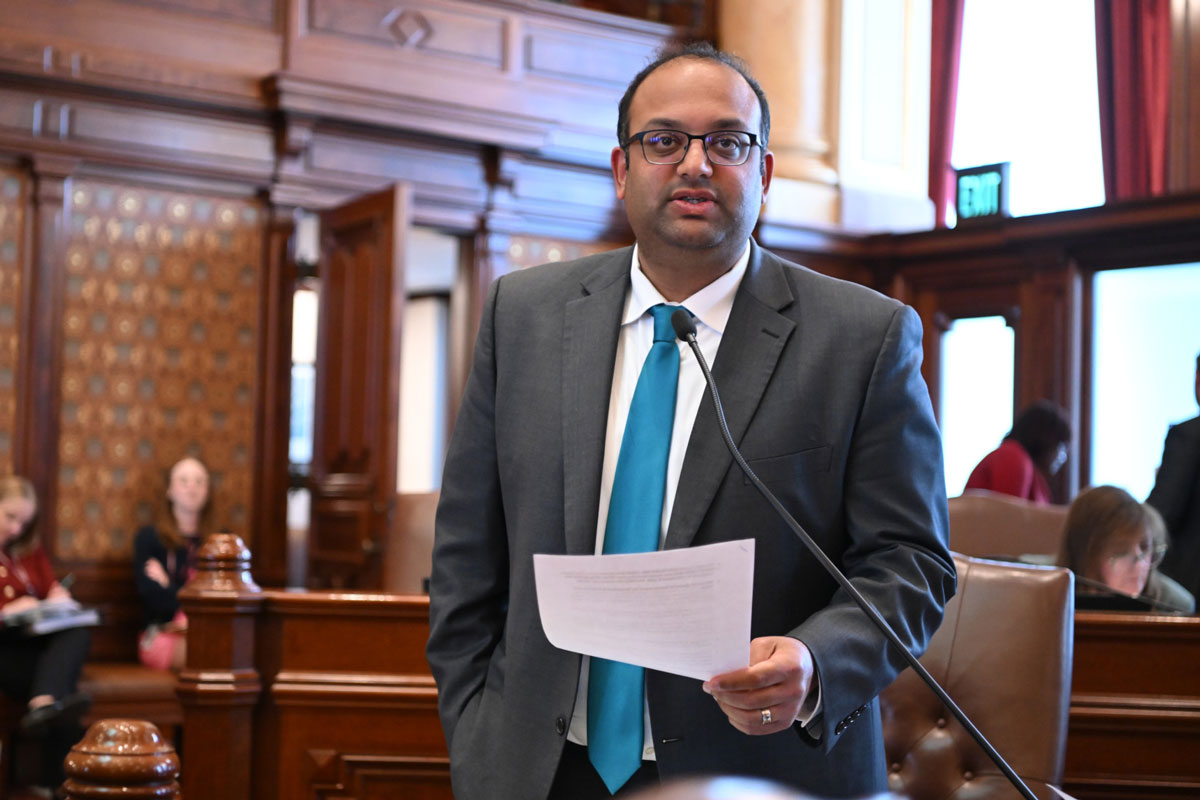 SPRINGFIELD ─ State Senator Ram Villivalam spearheaded a new law that establishes regulations for the use of toy vehicles, motor-driven bicycles and other small, low-speed electric mobility devices in Illinois.
“Technology is evolving, providing expanded mobility options for our neighbors through the rise in popularity of e-bikes and scooters,” said Villivalam (D-Chicago). “But without clear regulations for these devices, we are seeing increased injuries and accidents – jeopardizing community safety.”
Read more: Villivalam leads law regulating use of micromobility devices
Lightford leads law to allow clear designation of intellectual disabilities on a driver’s license
- Details
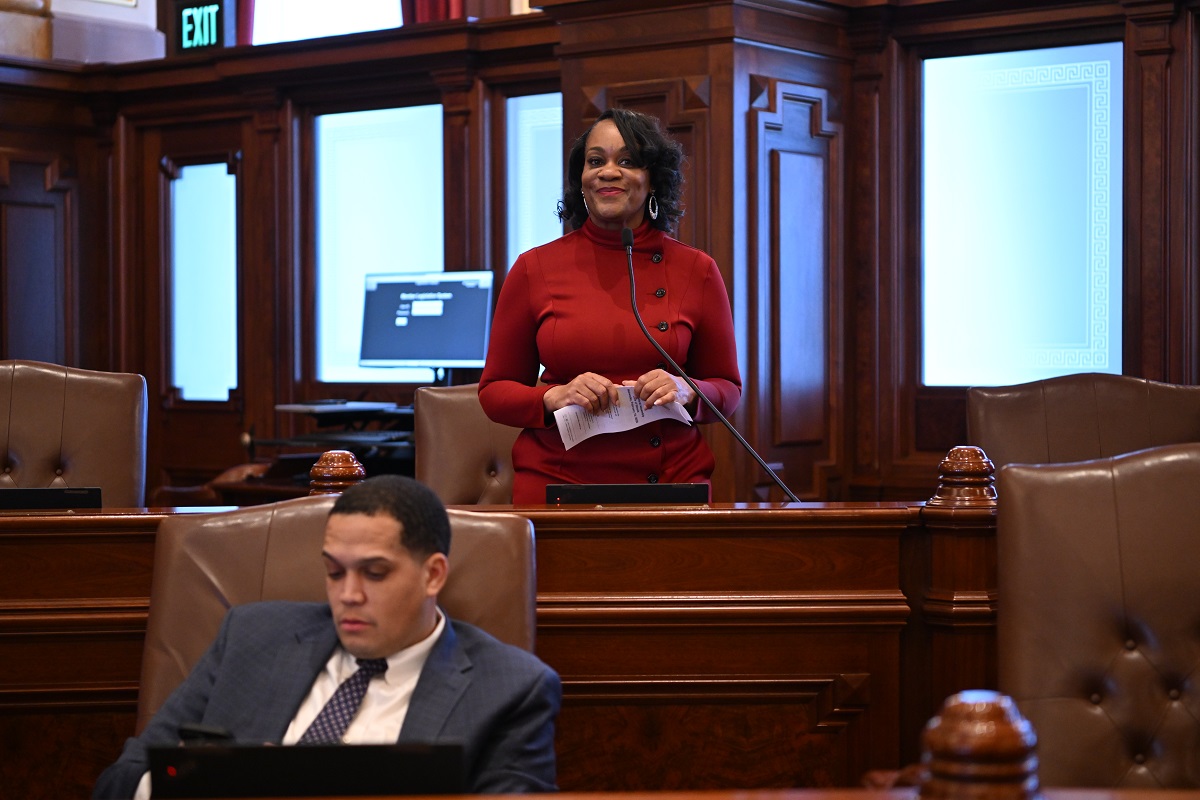 SPRINGFIELD – Senate Majority Leader Kimberly A. Lightford pushed for a protocol that will give drivers with autism and other intellectual disabilities the ability to clearly define their disability on their license – leading to safer traffic stops and interactions with law enforcement.
“A routine traffic stop is stressful for anyone – but for a driver with autism or another condition that affects how they process social cues and respond to commands, it can quickly escalate into a crisis,” said Lightford (D-Maywood). "Both the driver and officer deserve tools to prevent that escalation.”
More Articles …
Page 1 of 838

Follow ILSenDems







Member News
-
Holmes’ new law gives family courts guidance to resolve pet custody when domestic partners split
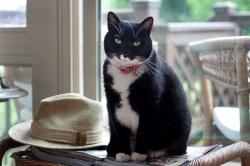 SPRINGFIELD – State Senator Linda Holmes remains steadfast in pursuing legislation to improve living conditions for animals, as her measure providing statutory guidance to Illinois courts when considering pet possession when unmarried couples break u...
 -
Porfirio resolution honors U.S. Marine Corps
 SPRINGFIELD – State Senator Mike Porfirio led a resolution to honor the U.S. Marine Corps through renaming a portion of Interstate Route 80. “Since its creation, the Marine Corps has played a key role in protecting and safeguarding the security and fr...
 -
Hastings: Freedom is never free
 SPRINGFIELD — State Senator Michael E. Hastings supported a resolution to honor the United States Marine Corps through renaming a portion of Interstate Route 80. Hastings, who served as a U.S. Army officer during Operation Iraqi Freedom, rose in supp...
 -
Jones honors fallen state trooper with memorial highway
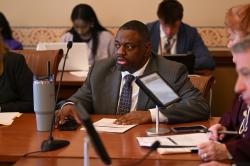 SPRINGFIELD – State Senator Emil Jones III successfully led a resolution to rename a portion of I-55 in honor of late State Trooper Clay M. Carns. “Trooper Carns died doing the same thing he had done every day for 11 years – diligently and faithfully...
 -
Johnson declares Menopause Awareness Week
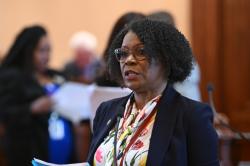 SPRINGFIELD – To bring awareness to a condition that will be faced by more than half of all Illinoisans, State Senator Adriane Johnson championed the effort to declare Oct. 11-17, 2026 Menopause Awareness Week. “Highlighting menopause is vital to gua...
 (217) 782-2728
 321 State House
Springfield, IL 62706




(312) 814-2075
160 N. LaSalle St., Ste. 720
Chicago, IL 60601